



Elementor #23233

Introduction: Fallopian Tube Blockage Treatment
One of the most frequent causes of female infertility is fallopian tube blockage, which impacts a woman’s ability to conceive. This is due to the fallopian tubes having the vital role of facilitating fertilization. Blockages in one or both of these tubes make conception nearly impossible because the tubes guide the egg to the uterus, where fertilization can occur.
There are many different reasons a fallopian tube can become blocked. These include past pelvic infections, the presence of endometriosis, a prior abdominal surgery, or the presence of hydrosalpinx. There is the possibility that a patient may have no symptoms, or there could be the presence of pelvic pain or the presence of abnormal discharge from the vagina.
Luckily, there are several methods available to help women diagnosed with blocked fallopian tubes. These tests are performed by doctors to confirm the diagnosis, such as HSG (Hysterosalpingography), Ultrasound, and Laparoscopy. A range of treatment plans are also available for different cases of blocked fallopian tubes. These plans can include infections-treating medications, tubal cannulation, surgery via laparoscopy, and IVF (In Vitro Fertilisation).
Having knowledge of the causes, symptoms and treatment options of blocked fallopian tubes can empower you in your fertility journey. An experienced fertility specialist can help you decide the most appropriate treatment option to improve your chance of becoming pregnant.
What Causes Fallopian Tube Blockage?
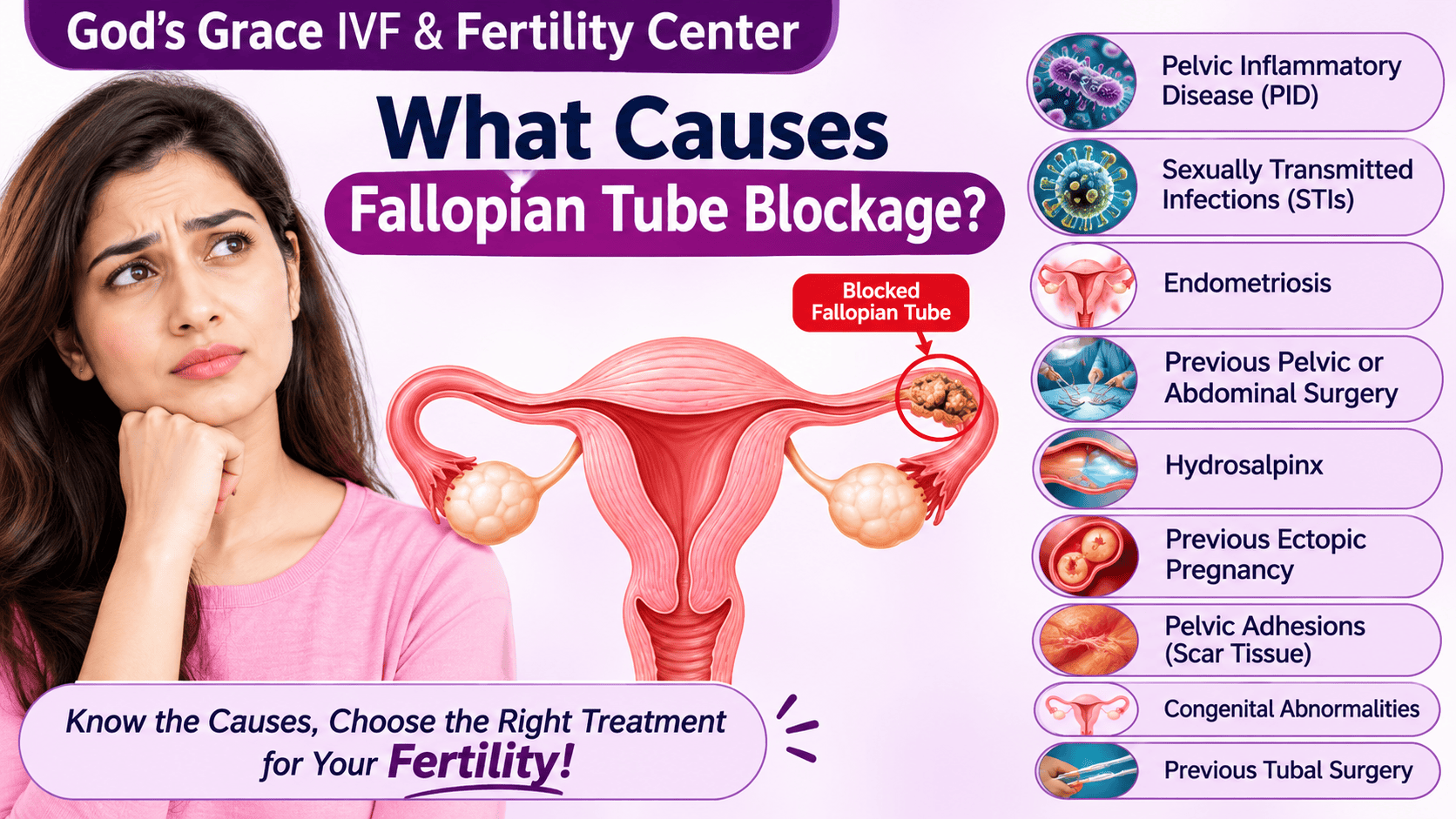
Blockages in the fallopian tubes are common. During natural conception, the fallopian tubes act as the pathway for sperm and the egg to meet, as well as the path to bring a fertilized egg to the uterus. There are many reasons why they may become blocked.
Causes for fallopian tube blockages are listed below:
1. Pelvic Inflammatory Disease (PID)
Pelvic inflammatory disease occurs when there are untreated bacterial infections. As a result, the inflammation, scarring, and other damage in the reproductive system causes the fallopian tubes to become blocked.
2. Sexually Transmitted Infections (STIs)
Untreated sexually transmitted infections such as chlamydia and gonorrhea may lead to blockages in the fallopian tubes and scarring of the tissue.
3. Endometriosis
Endometriosis occurs when cells resembling those that make up the uterine lining are found outside the uterus. The resulting inflammatory processes and the production of adhesions and scar tissue, may also block the fallopian tubes.
5. Hydrosalpinx
A fluid filled fallopian tube is a Hydrosalpinx. This condition is often due to an outer end blockage and results in the inability to become pregnant.
6. Previous Ectopic
Pregnancy This occurs when an egg has been fertilized and has begun to grow outside of the uterus, for example in the fallopian tube. An ectopic pregnancy can result in the fallopian tube being blocked and damaged.
7. Pelvic Adhesions
The fallopian tubes can develop adhesions or scar tissue from inflammation or infection. These adhesions may result in the inability for the egg to move through the fallopian tube or the fallopian tube not being able to move.
8. Congenital Abnormalities
Structural anomalies of the reproductive tract can sometimes cause abnormalities in the fallopian tubes, but it is quite rare.
9. Previous Tubal Surgery
Tubal scarring or blockage can happen after procedures on the fallopian tubes such as tubal ligation or surgery to remove an ectopic pregnancy.
What Are the Symptoms of Blocked Fallopian Tubes?
Most women won’t notice any symptoms of blocked fallopian tubes. Nevertheless, such condition could interfere with getting pregnant or may even lead to infertility. Here are some of the most common signs.
1. Trouble getting pregnant: Perhaps the biggest symptom of blocked fallopian tubes is having trouble falling pregnant while having unprotected intercourse.
2. Pelvic pain: In some cases, women feel pain in the pelvis, which is a result of some other infections or inflammation.
3. Painful periods: Sometimes, one cannot tell if their period cramps are due to the blocked fallopian tubes or due to endometriosis.
4. Abnormal discharge: Abnormal discharge may signal an infection that, if untreated, may damage the fallopian tubes.
5. Pain during intercourse: Inflammation in the pelvic region or endometriosis may cause pain in sexual intercourse.
6. History of ectopic pregnancy: ectopic pregnancy may point to any existing damage to the tubes.
Important to note that some women don’t show any symptoms at all when the fallopian tubes are blocked. The only way to diagnose the blockage is doing HSG test or any other similar test.
Can You Get Pregnant with One Blocked Fallopian Tube?
Yes, it is possible to conceive when one fallopian tube is blocked if the other is functioning properly. An uncomplicated pregnancy can take place because a single healthy tube can permit sperm to meet the egg.
Nevertheless, the likelihood of conception relies on different factors:
1. The Condition of the Other Tube: Sometimes natural fertilization can occur if one tube is open and healthy.
2. Ovulation: The process of ovulation is crucial to getting pregnant.
3. Age and Quality of the Eggs: Age of the woman and the state of eggs are important parts of reproduction.
4. The Reason for the Blocked Tube: Some health issues may result in the blockage of the fallopian tube and affect fertility.
5. Your Overall Reproductive Health: It is worth noting that the quality of sperms and overall uterine condition also play an important role in getting pregnant.
When Should You Seek Treatment?
If you have problems with conception, you should see a fertility specialist who will conduct thorough testing. For instance, HSG can be used to check the condition of your tubes.
At God’s Grace IVF & Fertility Center, depending on the specific problem, there is a variety of treatment options available, such as the use of laparoscopy
Frequently Asked Questions (FAQs)
1. What is fallopian tube blockage?
Fallopian tube blockage occurs when one or both tubes become partially or completely blocked, preventing the egg and sperm from meeting naturally.
2. What are the main causes of blocked fallopian tubes?
Common causes include pelvic infections (PID), sexually transmitted infections, endometriosis, previous pelvic surgery, ectopic pregnancy and pelvic adhesions.
3. What are the symptoms of blocked fallopian tubes?
Many women experience no noticeable symptoms. Some may have pelvic pain, painful periods, discomfort during intercourse or difficulty getting pregnant.
4. Can I get pregnant with one blocked fallopian tube?
Yes. Natural pregnancy is possible if the other fallopian tube is healthy and functioning properly.
5. Can I get pregnant if both fallopian tubes are blocked?
Natural conception becomes very difficult if both tubes are completely blocked. IVF can help achieve pregnancy by bypassing the fallopian tubes.
6. How is fallopian tube blockage diagnosed?
HSG (Hysterosalpingography), ultrasound-based tests and laparoscopy with dye testing may help diagnose tubal blockage.
7. Can medicines open blocked fallopian tubes?
Medicines can treat certain infections but cannot usually remove established scar tissue or physical blockages.
8. Is surgery effective for blocked fallopian tubes?
In selected cases, laparoscopic surgery or tubal cannulation may help restore tubal function. Results depend on the location and severity of the blockage.
9. What is the best treatment for fallopian tube blockage?
Treatment depends on the cause and severity. Options may include infection treatment, tubal surgery or IVF.
10. Is IVF successful for women with blocked fallopian tubes?
Yes. IVF is an established fertility treatment for women with blocked fallopian tubes because fertilization takes place outside the body, bypassing the tubes.
Consultation at God’s Grace IVF & Fertility Center
Dr. Roshi Satija
Gynaecologist | IVF & Fertility Specialist
Call: 9599309074
A-8, Main Road, Shivalik, Malviya Nagar, New Delhi